PAK vs SL Day 3: Dhananjaya's Century Turns the Rawalpindi Test
Two days ago, Pakistan looked in control of the first Test against Sri Lanka in Rawalpindi. By the second session on Day 3, that control had slipped away — and the man responsible was Dhananjaya de Silva, whose fighting century dragged Sri Lanka right back into a match that had seemed to be drifting Pakistan's way.
At the time of writing, Sri Lanka are 331 for 4, trailing Pakistan's 434 for 9 declared by just 103 runs, with Dhananjaya unbeaten on 136 and captain Kusal Mendis on 79. The pair have added 176 runs together, and Pakistan's bowlers have spent most of the day searching for a breakthrough that refuses to come.
This is Test cricket at its most honest: a first innings that looked commanding can be undone by one long partnership.
How Day 3 unfolded
Sri Lanka resumed the third morning still 320 runs behind, and for a while Pakistan's plan seemed to be working. Mohammad Abbas, the most experienced bowler in the attack, removed Kamindu Mendis for 58, caught behind by wicketkeeper Muhammad Ghazi Ghori, to leave the visitors on 155 for 4. A collapse felt possible.
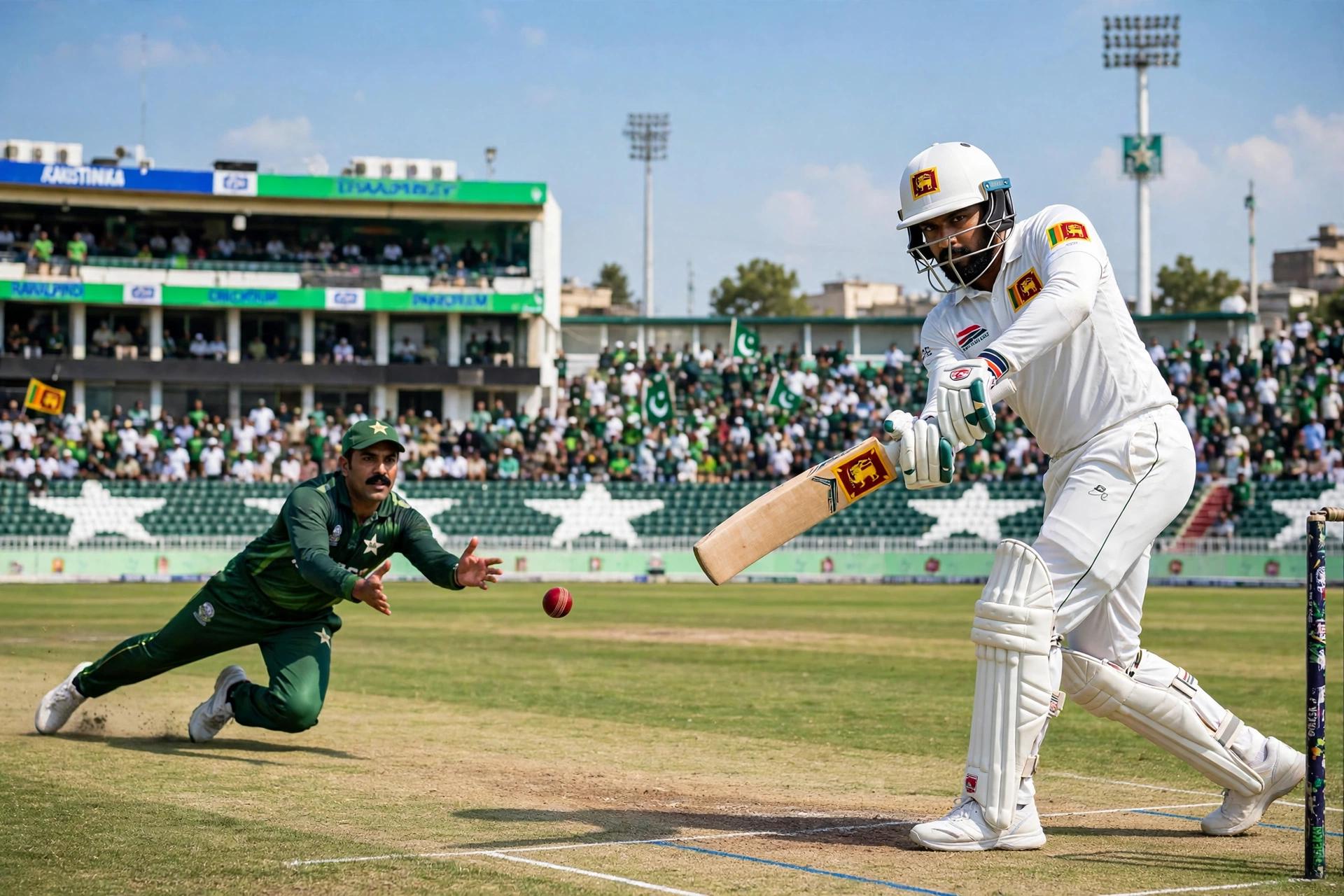
It never came. Dhananjaya, already unbeaten on 22 overnight, settled in alongside his captain and the two of them simply refused to give Pakistan another opening. Their partnership passed 100, then 150, and by the second session it stood at 176 from 264 balls. Dhananjaya brought up his 14th Test hundred with calm, unhurried batting — 136 not out from 202 balls, with 16 fours — while Kusal, captaining Sri Lanka in Tests for the first time, grew in confidence beside him, reaching 79 from 129 balls with five fours and three sixes.
Pakistan's bowlers have toiled without reward. Abbas has been the pick, with figures of 2 for 52 from 24 overs, including nine maidens — a reminder of why control matters in Test cricket even when wickets are not falling. Debutant Saqib Khan has bowled 23 overs for his two wickets, and Razaullah has gone wicketless despite long spells. The last ten overs before the latest update produced just 28 runs and no wicket, which tells its own story: Sri Lanka are not scoring quickly, but they are not getting out either.
That is the danger for Pakistan. A slow, grinding partnership eats into the first-innings lead and wears bowlers down. Every over Sri Lanka survive brings them closer to parity — and once they pass Pakistan's total, the pressure flips onto the home side's second innings.
Pakistan's first innings: the debutants delivered
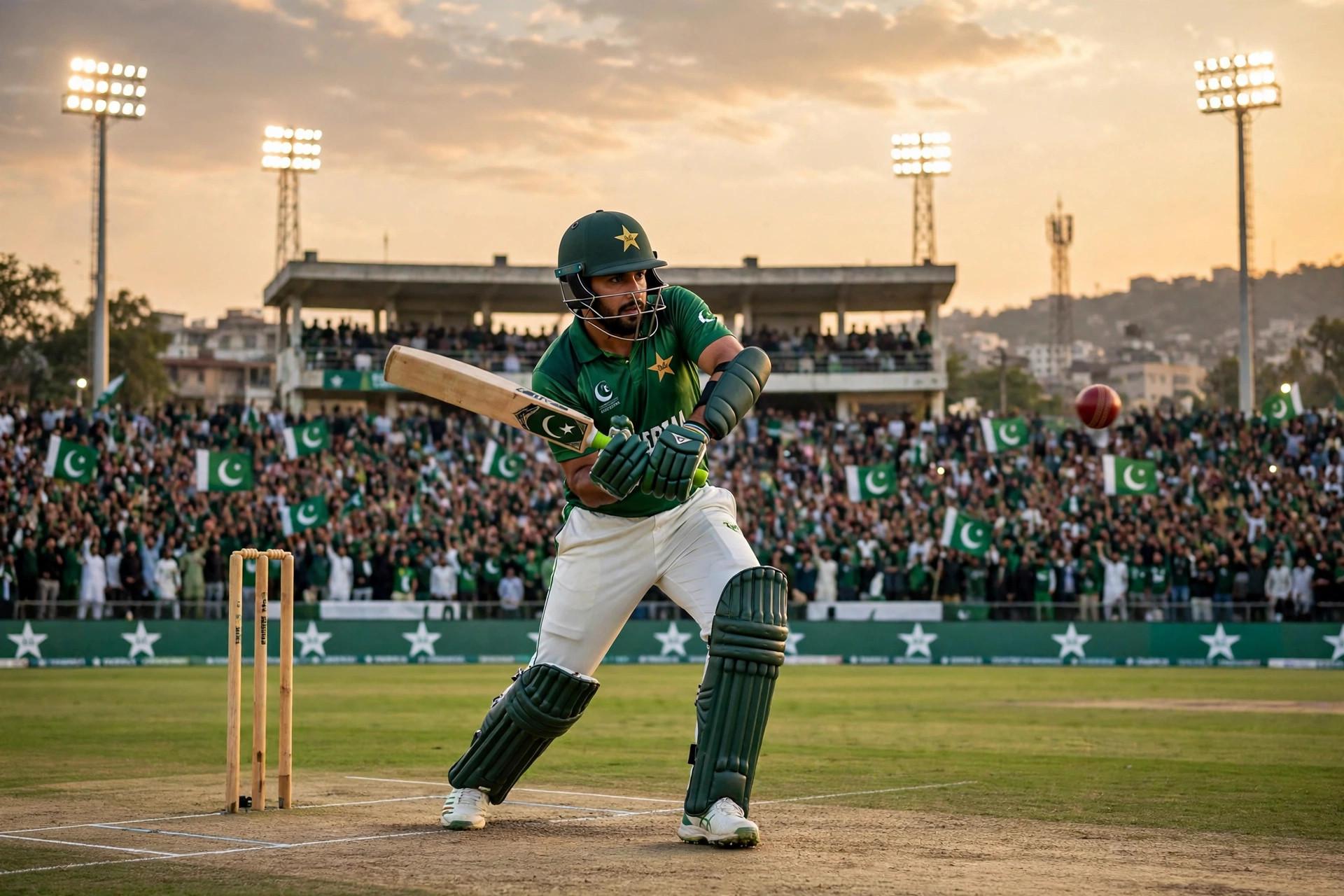
To understand why the match is so finely balanced, it is worth remembering how well Pakistan batted first. Sri Lanka won the toss on Monday and chose to bowl, backing their seamers on a fresh Rawalpindi surface. Pakistan closed a shortened first day on 281 for 5, with bad light ending play early, and on the second morning they pushed on to declare at 434 for 9 in 106.3 overs.
The innings was built on contributions right through the order. Saud Shakeel top-scored with 93, a patient, responsible innings that held the middle order together. Captain Babar Azam made 50, and the most encouraging story of all was debutant Arafat Minhas, who scored 52 in his first Test innings. For a team that handed Test debuts to four players in this match — Tayyab Arif, Mohammad Taha, Saqib Khan and Arafat Minhas — that is exactly the kind of return the selectors would have wanted.
Sri Lanka's bowlers shared the work: Asitha Fernando took 3 for 107 and Dilshan Madushanka 3 for 108. Nobody ran through Pakistan, but nobody was hammered either. A total of 434 looked strong, the sort of score that usually buys a team control of a Test. It still might. But in Test cricket, a strong total only matters if the bowlers can back it up — and on Day 3, Pakistan's attack has not yet found the second gear it needs.
Saqib Khan's debut: a bright spot with the ball
If there is one Pakistan performance to celebrate from the first three days, it is Saqib Khan's. The debutant fast bowler struck twice on the second evening as Sri Lanka stumbled to 114 for 3 at stumps: first he removed the experienced Dinesh Chandimal for just 1, then he dismissed a well-set Lahiru Udara for 42 to leave the visitors on 65 for 3.
Those two wickets were the reason Pakistan went into Day 3 ahead of the game. Saqib's figures of 2 for 96 from 23 overs do not look spectacular on paper, but debut wickets in Test cricket are earned, not given — and Chandimal's was the wicket of a batsman with more than a decade of international cricket behind him.
Alongside him, Mohammad Abbas has done what Abbas always does: bowl long, disciplined spells and ask questions of every batsman. His two wickets, including the key dismissal of Kamindu Mendis, have kept Pakistan in the contest. But Abbas cannot do it alone, and the longer Dhananjaya and Kusal bat, the more Pakistan will miss a cutting edge from the rest of the attack.
What Pakistan must do now
The equation from here is simple to state and hard to execute. Pakistan need wickets, and they need them soon. If Sri Lanka bat through the rest of Day 3 and into Day 4, they could easily build a lead — and with two days still to play after that, a lead of even 50 or 60 runs would put real pressure on Pakistan's second innings.
Three things will decide the rest of this Test:
Break the partnership before it reaches 200. Every run Dhananjaya and Kusal add together makes Sri Lanka's position stronger. Pakistan need a moment — a ball that keeps low, a sharp catch, a lapse in concentration — and they need it in the next session, not tomorrow.
Attack in short, sharp bursts. With the ball now more than 80 overs old, Pakistan's seamers need to rotate in fresh spells and hunt wickets in clusters, rather than letting the game drift through long, comfortable overs.
Remember the World Test Championship. This is not a dead-rubber friendly. Both Tests count towards the ICC World Test Championship 2025–27 cycle, and the stakes are high. Pakistan sit at the bottom of the standings with a points percentage of just 4.63, having won two and lost seven of their nine matches. Sri Lanka are seventh on 33.33 percent. For Pakistan, this home series is one of the few realistic chances to climb off the bottom — a draw here, after dominating the first two days, would feel like a defeat.
The second Test moves to Rawalpindi
While the first Test has been unfolding, the Pakistan Cricket Board has already changed the plan for the second. The match, originally scheduled for Gaddafi Stadium in Lahore from 17 to 21 November, will now also be played at Rawalpindi Cricket Stadium. The dates are unchanged.
The reason is Lahore's air. The city has been battling severe smog, and according to the Punjab Environmental Protection Agency, the Air Quality Index touched 421 — firmly in the hazardous category. With the health of players, officials, support staff and spectators at stake, the PCB decided against staging another international match in the city under the prevailing conditions.
It is a sensible decision, and a sad one. Lahore has hosted some of Pakistan's most memorable Test moments, and losing a home Test to pollution is a reminder that cricket does not exist in a bubble. For the players, though, the change has a silver lining: Rawalpindi's pitch has already produced an absorbing contest, and both teams will now finish the series on a surface they have just spent five days learning.
What it means for the series
With the second Test now also in Rawalpindi, the series has become a two-match shootout on the same ground. That raises the value of everything that happens in these last two days of the first Test: which bowlers look dangerous, which batsmen look comfortable, and how the pitch behaves as it ages.
For Pakistan, the message from Day 3 is clear. The batting did its job and the debutants have shown they belong. But Test matches are won by taking twenty wickets, and right now Sri Lanka's fifth-wicket pair are showing how hard that can be. If Pakistan find a way through them tonight or tomorrow morning, they can still force a result. If they do not, they will spend the rest of the week chasing a game they once controlled.
Either way, the Rawalpindi Test has already delivered what every cricket fan wants: a genuine contest, a debutant making his mark, a captain's hundred under pressure — and a second Test to come that neither side can afford to lose.
Scores in this article are as of the second session on Day 3, Wednesday 11 November 2026.
Sources
- Cricbuzz — Pakistan vs Sri Lanka, 1st Test live score and commentary
- Gulf Times — Sri Lanka struggle to 114-3 after Pakistan's first Test declaration
- Outlook India — Pakistan vs Sri Lanka 2nd Test shifted from Lahore to Rawalpindi
- Wisden — PAK vs SL Tests 2026: full schedule, squads, venues and match timings
- ICC — Pakistan update WTC27 series squad against Sri Lanka