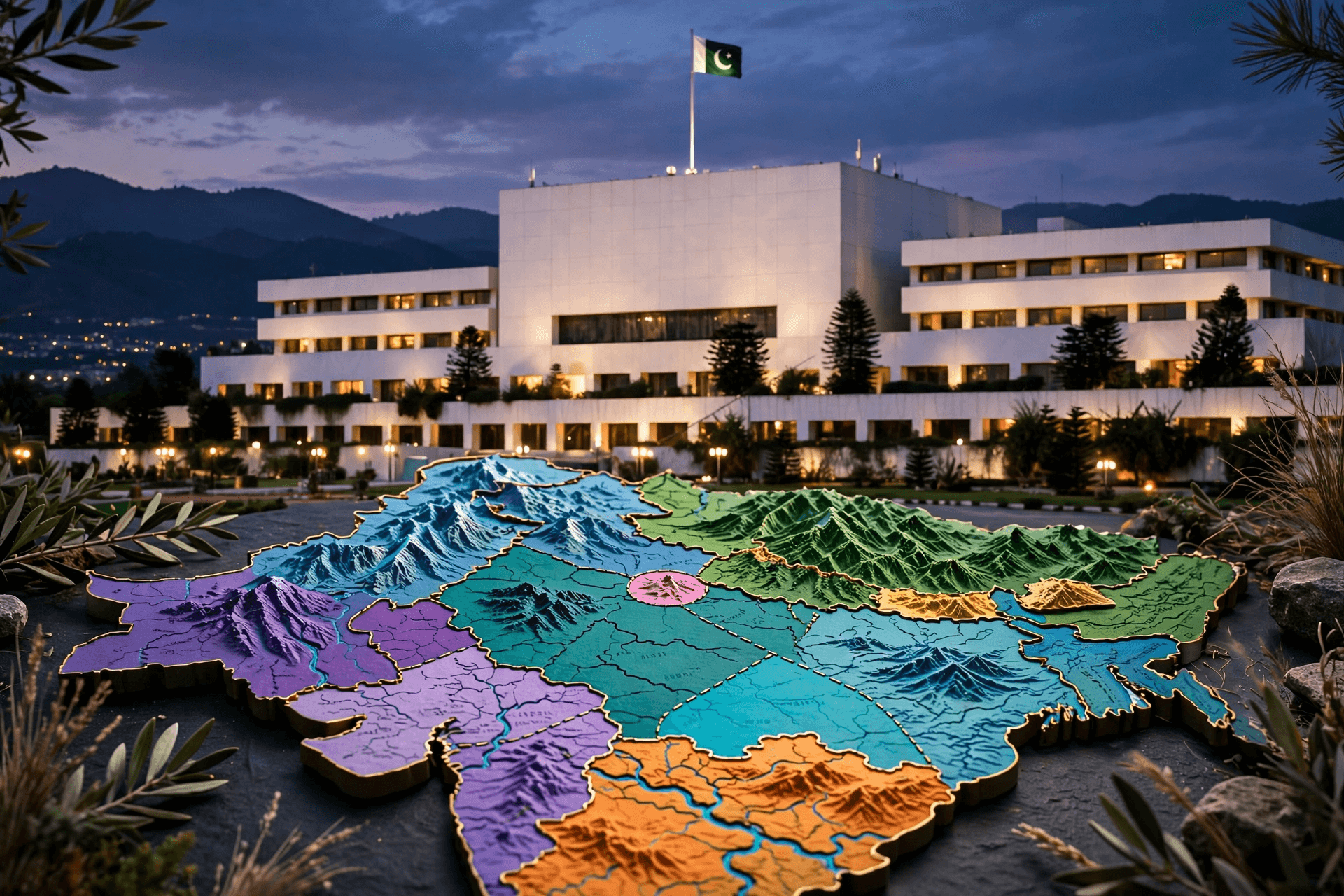
For decades, Pakistan has talked about the treasure under its feet — copper and gold in Balochistan, pink salt in the Salt Range, iron ore in Punjab, marble and gemstones in the north. This week in Islamabad, the government tried to turn that talk into something harder: signed partnerships, processing plants and a promise that this time the minerals will be mined, processed and sold as finished value — in Pakistan.
The Pakistan Minerals Investment Forum 2026, held in Islamabad on November 12 and 13, brought together government leaders, provincial chief ministers and delegates from more than 60 countries. The message from every podium was the same: Pakistan's mineral wealth is real, the world wants it, and the old model — dig it up, ship it out raw, earn a fraction of its worth — has to end.
A "game-changer" for the economy
Finance Minister Muhammad Aurangzeb opened the economic case on the forum's first day, describing minerals and mining as a potential "game-changer" for the economy — possibly the most important sector in taking Pakistan towards sustainable growth.
His argument was about breaking a cycle Pakistan knows too well. Stabilisation is followed by a burst of consumption-led growth, which is followed by a balance-of-payments crisis. "Whenever we get to a stabilisation phase, the question is, where is the growth? And that's when we get into what I call the gold rush," he said. His answer: growth has to be export-led, and mining is one of the few sectors big enough to move the needle.
The numbers he put on the table were striking. A single mining project is expected to generate $2.8 billion in export proceeds once it becomes commercially operational. The project has secured the largest syndicated financing in Pakistan's history, and its financiers remain committed despite past delays, he said.
Aurangzeb also pointed to the wider stabilisation story: the economy contracted a few years ago, then grew by 2% and then 3%, with growth last year slightly below 3.7% and the government projecting 4% for the current fiscal year. The twin deficit — fiscal and current account combined — has come down from around 12.5% of GDP a few years ago to 2.6% by the end of June 2026, with the fiscal deficit at a 22-year low and primary surpluses recorded for three consecutive years. Foreign exchange reserves have risen to $21.5 billion, the highest in the country's history.
"Mine in Pakistan, process in Pakistan, manufacture in Pakistan"
Prime Minister Shehbaz Sharif's address on Friday gave the forum its clearest slogan — and its clearest test. Investors, he said, should mine, process and manufacture minerals in Pakistan rather than export them in raw form.
"My humble and sound advice to you would be: mine in Pakistan, process in Pakistan, manufacture in Pakistan and then export to the rest of the world," he said, describing the approach as the government's philosophy and mission. He renewed a commitment he had made at the previous edition of the forum: to end the practice of exporting precious minerals in raw form. "Insha'Allah, the day is not far away when this will come to a grinding halt, and these treasured minerals will be fully utilised by Pakistan's downstream industry."
The downstream industries he named were specific: refineries, smelters and cable and conductor factories. The point is simple arithmetic — a tonne of raw copper ore earns a fraction of what refined copper, wire and cable earn. Pakistan has been selling the ore and buying back the wire.
The prime minister also stressed that mining must go hand in hand with environmental protection, using modern technology and international standards to safeguard water resources and workers' health and safety. And he insisted that mineral development must deliver tangible benefits to the communities near mining sites — employment, local businesses, schools, healthcare facilities and clean drinking water. Local populations, he said, must become the primary beneficiaries.
To investors worried about red tape, he offered something unusual: a personal guarantee. "If any file gets stuck due to bureaucratic delays or cumbersome procedures, bring it straight to me. I will personally ensure that it moves with lightning speed." He added that the National Mineral Data Cell and digitisation of geological records would let investors assess underground resources before committing funds — and that protecting investors' personnel, assets and supply routes was the government's fundamental responsibility.
Reko Diq: the project that has to work
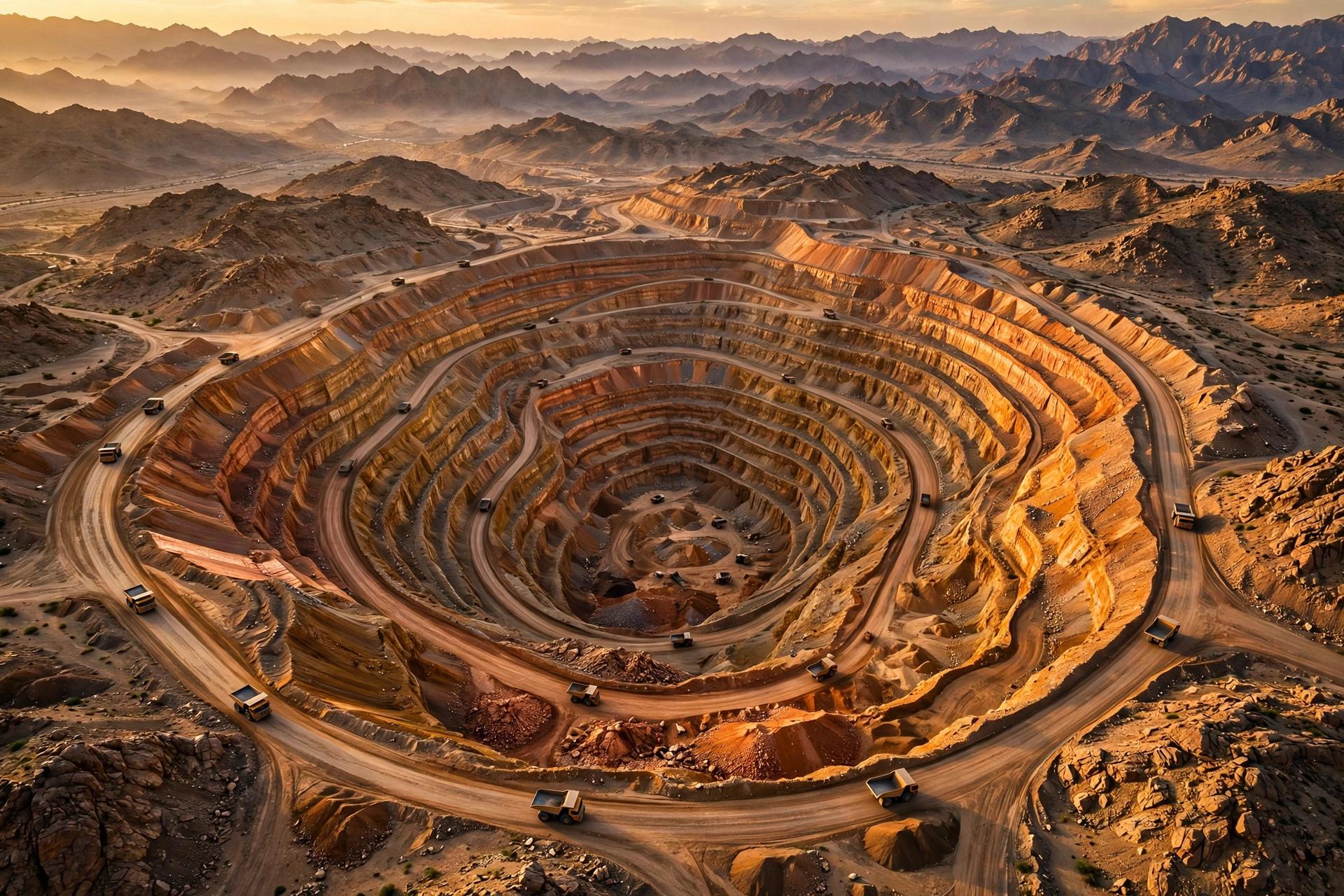
No mineral story in Pakistan matters more than Reko Diq, the copper and gold deposit on the Tethyan Copper Belt in Balochistan, which the prime minister described as one of the world's largest untapped copper and gold deposits. Production is expected to begin in 2028, he said, adding that a project stalled for two decades was now moving towards operational execution.
He thanked Barrick, the project's operator, for maintaining its confidence in Pakistan, and acknowledged its chairman, John Thornton, for sharing Goldman Sachs' assessment that Pakistan could become the world's sixth-largest economy by 2075. The prime minister was bolder: "Instead of 2075, Insha'Allah, it will be earlier than 2050."
The provinces make their pitch
One of the forum's most interesting features was that the provinces pitched directly. Deputy Prime Minister and Foreign Minister Ishaq Dar, who opened the forum, said Pakistan stood at a pivotal juncture in its economic journey, and pointed to the National Mineral Policy, the Pakistan Investment Policy 2023 and the Special Investment Facilitation Council as the institutional basis for investor protection and coordinated development. He described Balochistan as vital to Pakistan's mineral future, noting that the global transition towards clean energy was driving demand for copper.
Punjab Chief Minister Maryam Nawaz said the province's revenue from its Mines and Minerals Department had increased fourfold — from Rs10 billion to Rs40 billion — over the past two and a half years. She listed Punjab's reserves of emeralds, marble, granite, gold, gemstones, copper, pink salt and rock salt, and said Chiniot possessed 261.5 million tonnes of iron ore that could be processed into steel.
Her most practical point was about pink salt: exported raw, it earns little; processed and packaged, it earns far more. Punjab has set up a Rs5 billion financing portfolio for pink salt value addition, with interest-free loans of up to Rs50 million. She also pointed to evidence of placer gold in Punjab's rivers around Mianwali and Attock, with surveys underway, and a mineral processing zone in Quaidabad, Khushab, offering land at nominal rent under a 15-year lease.
Sindh Chief Minister Murad Ali Shah urged investors to visit the provinces rather than limiting their engagements to Islamabad, and said Sindh was exploring opportunities to convert coal into fertiliser and gas, with projects hoped to be finalised within the next year. He also referred to promising lithium reserves in Sindh, saying he had recently discussed the matter with the chairman and managing director of the Oil and Gas Development Company, and that the reserves should be properly explored over the coming year. Lithium — the metal at the heart of batteries — would be a major find if the reserves prove commercially viable.
Security: the promise that underpins everything
Chief of Defence Forces and Chief of Army Staff Field Marshal Asim Munir pledged to ensure security across the mining sector, saying every possible measure was being taken to protect mines, miners, investments, industries, projects and people. He said Pakistan aimed to become a competitive destination for long-term mineral investment, and called for a shift "from potential to production, promises to implementation, and raw material exports to value-added economic growth."
That pledge matters because security has been the quiet condition behind every mining conversation in Pakistan. Investors can live with difficult geology; they cannot live with unsafe sites.
Reasons for caution
None of this means the path is clear. A Bloomberg report carried in early November noted that Pakistan's rebound — record reserves, a stock market up more than 300% since 2023 — masks deeper problems: inflation pushed up by high energy costs and the US-Iran war, with oil above $100 a barrel, a central bank that raised interest rates by 50 basis points to 12%, and continued reliance on IMF support. Pakistan is on its 25th IMF programme since joining the Fund in 1950, and reached a staff-level agreement last month that could unlock another $1.2 billion.
What to watch next
For ordinary Pakistanis, the forum's promises will be judged on a few concrete things. Does Reko Diq actually start production in 2028? Do the refineries, smelters and cable factories the prime minister described actually get built — or does the ore keep leaving in raw form? Do the communities near the mines get the jobs, schools, clinics and clean water that were promised?
The minerals are not going anywhere. The question the Islamabad forum asked — and the one its promises will be measured against — is whether Pakistan can finally sell what is under its ground for what it is actually worth.
Sources
- The Express Tribune, "Finance minister dubs mining sector a 'game-changer' for Pakistan's economy at investment forum in Islamabad", November 12, 2026 — https://tribune.com.pk/story/2639911/pakistan-courts-global-investors-at-minerals-investment-forum-as-provinces-outline-opportunities
- The Express Tribune, "PM pitches mineral wealth to fuel economic boom", November 14, 2026 — https://tribune.com.pk/story/2640223/pm-pitches-mineral-wealth-to-fuel-economic-boom
- Bloomberg via Profit (Pakistan Today), "Pakistan's rebound masks deeper problems weighing on economy", November 4, 2026 — https://profit.pakistantoday.com.pk/2026/11/04/pakistans-rebound-masks-deeper-problems-weighing-on-economy-bloomberg